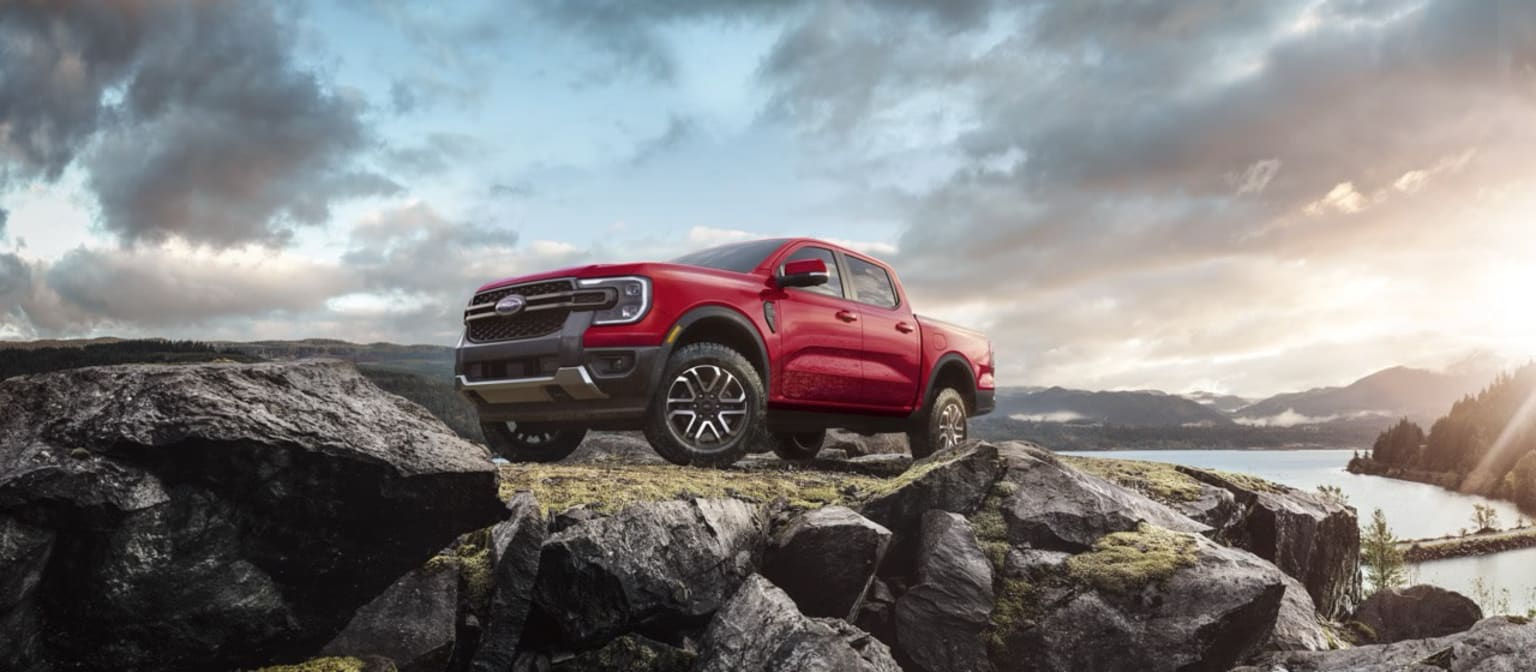
Ford Ranger vs. Nissan Frontier:
Capability Goes Head-to-Head
Two Trucks Enter. One Adventure Wins.
Ranger vs Frontier is a natural midsize-truck comparison. Both are easier to maneuver than a full-size pickup, but they can still tow, haul, head off pavement, and handle the kind of weekend gear that turns a crossover into a bad idea.
For the current 2026 models, Ranger gives shoppers three available engine outputs, up to 7,500 pounds of towing, a maximum available payload of 1,767 pounds, and the high-performance Ranger Raptor®. Frontier answers with a standard 310-hp V6 across the lineup, up to 7,150 pounds of towing, available 4x4, and the trail-focused PRO-4X®.
At J.C. Lewis Ford Pooler, we’d rather help you focus on the numbers that affect how you’ll actually use the truck: power, towing, payload, bed choices, off-road hardware, and what you get behind the wheel when weighing Ford Ranger vs Nissan Frontier.
Ranger vs Frontier at a Glance
The Ford Ranger vs Nissan Frontier story starts with two very different approaches to midsize-truck capability.
Specification | 2026 Ford Ranger | 2026 Nissan Frontier |
|---|---|---|
Standard engine | 2.3L EcoBoost® I-4 | 3.8L V6 |
Standard horsepower | 270 hp | 310 hp |
Max available horsepower | 405 hp | 310 hp |
Max available torque | 430 lb-ft | 281 lb-ft |
Max available towing | 7,500 lbs. | 7,150 lbs. |
Max available payload | 1,767 lbs. | 1,590 lbs. |
Transmission | 10-speed automatic | 9-speed automatic |
Off-road flagship | Ranger Raptor | Frontier PRO-4X |
Available 4x4 | Yes | Yes |
Seating | Up to 5 | Up to 5 Crew Cab |
Specifications vary by configuration.
The quick takeaway from the Ford Ranger vs Nissan Frontier numbers is that Frontier starts with more standard horsepower, while Ranger offers the broader performance range, higher maximum tow rating, and higher maximum payload.
One V6 for Frontier, Three Levels of Ranger Power
The powertrain strategy is one of the biggest differences in Ford Ranger vs Nissan Frontier. Ranger lets you choose how far you want to turn things up, while Frontier keeps one V6 across the lineup.
Ford Ranger
The Ranger starts with a 2.3L EcoBoost four-cylinder making 270 horsepower and 310 lb-ft of torque. XLT and Lariat can add the available 2.7L EcoBoost V6 with 315 horsepower and 400 lb-ft, while Ranger Raptor uses a 3.0L EcoBoost V6 producing 405 horsepower and 430 lb-ft. All three pair with a 10-speed automatic.
Nissan Frontier
Every 2026 Frontier uses the same 3.8L V6, producing 310 horsepower and 281 lb-ft of torque through a 9-speed automatic. That gives Frontier more standard horsepower than the base Ranger without requiring an engine upgrade.
Ranger Puts More at the Top of the Tow Chart
If towing sits high on your list, the Ford Ranger vs Nissan Frontier numbers separate by a few hundred pounds.
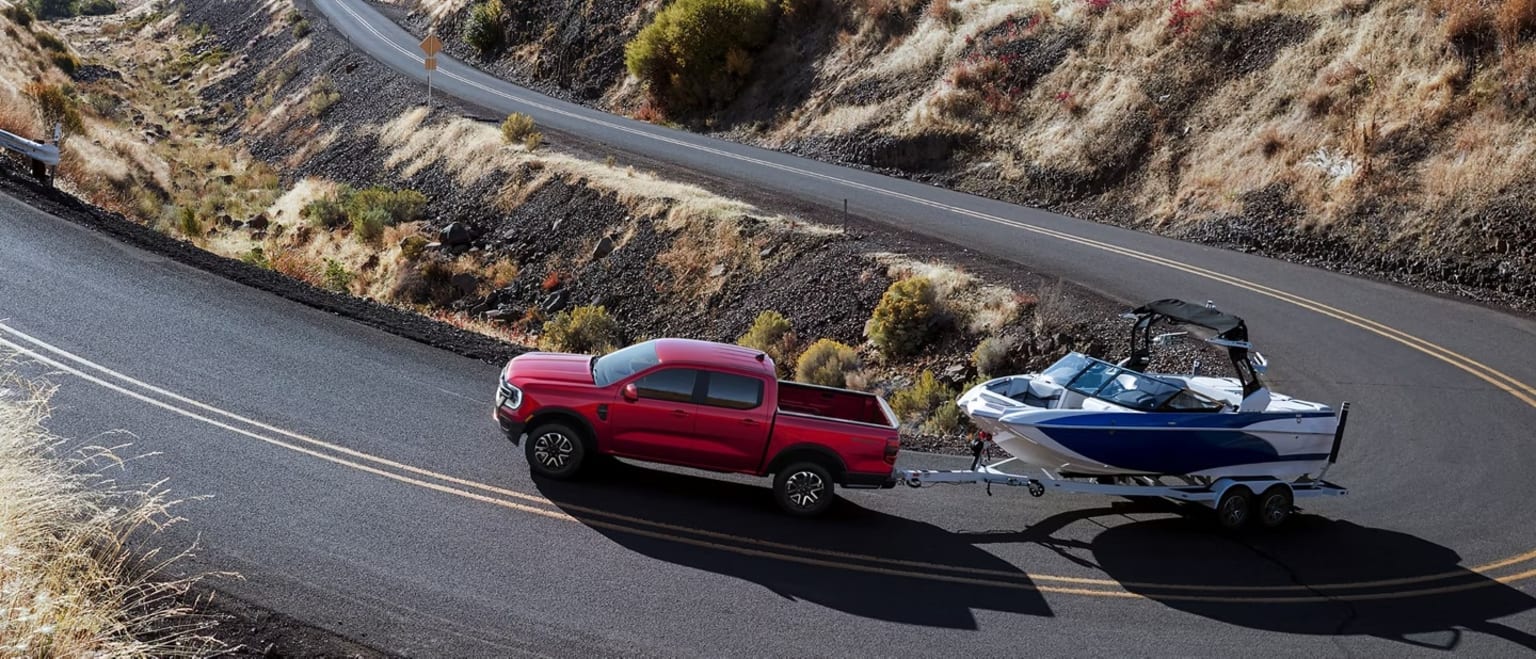
Properly equipped Ranger XL, XLT, and Lariat models can tow up to 7,500 pounds with the available Trailer Tow Package. Ranger Raptor is rated lower at up to 5,510 pounds because its chassis is tuned around high-performance off-road driving rather than maximum trailer capacity.
The 2026 Frontier can tow up to 7,150 pounds, with the exact figure changing by cab, drivetrain, and bed configuration.
For Ranger vs Frontier, that 350-pound gap isn’t huge, but it can matter once trailer weight, passengers, cargo, and equipment start adding up. Always confirm the rating of the exact truck before towing.
Payload Matters After the Trailer Comes Off
A truck still has work to do when nothing’s connected to the hitch.
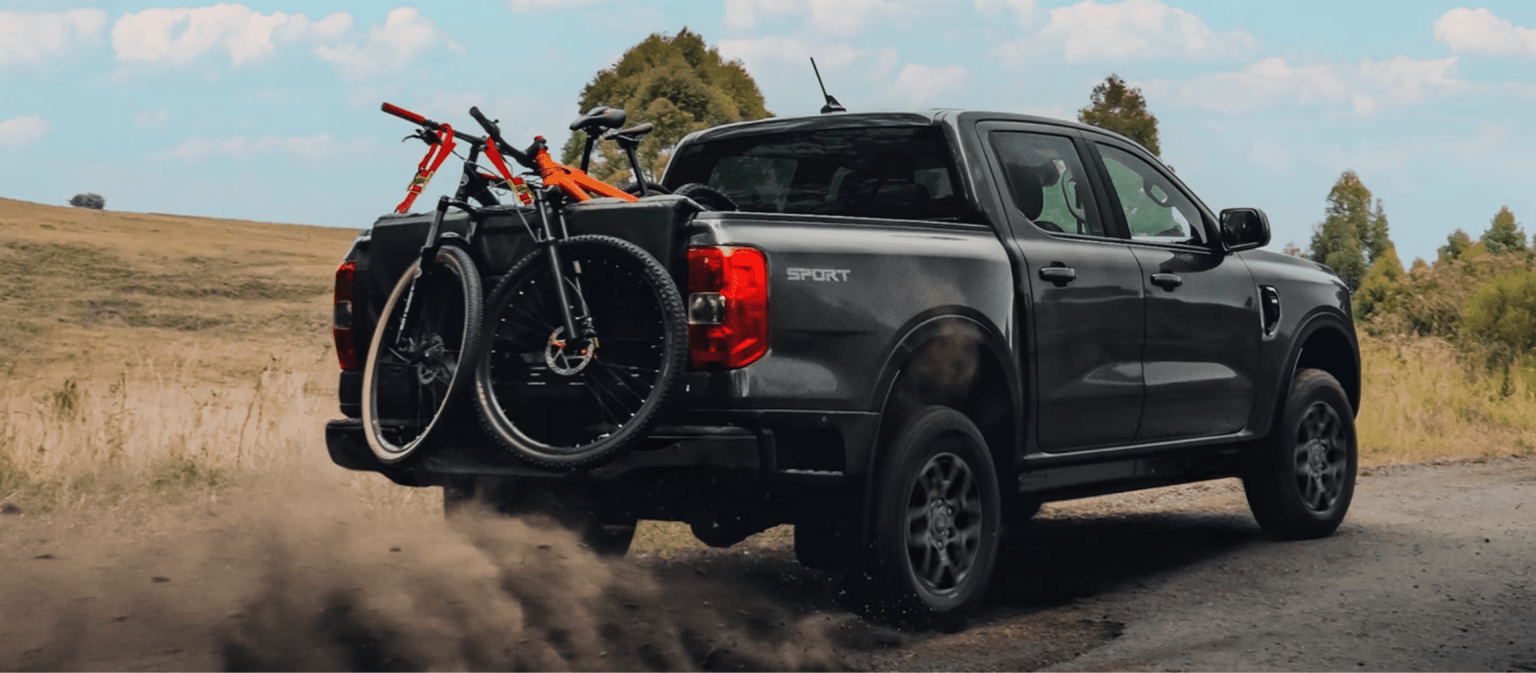
When comparing Ford Ranger vs Nissan Frontier for payload, Ranger reaches a maximum available 1,767 pounds with the 2.3L EcoBoost and 4x2 drivetrain. Available payload changes with engine and drivetrain; Ford lists up to 1,763 pounds for a 2.3L 4x4 and 1,513 pounds with the available 2.7L V6.
Frontier reaches up to 1,590 pounds in King Cab 4x2 form. Crew Cab payload varies by trim and drivetrain, with the maximum dropping as equipment and 4x4 hardware are added.
For shoppers working through a Nissan Frontier vs Ford Ranger comparison, those payload figures are worth checking against what normally goes in the bed—tools, coolers, landscaping supplies, camping equipment, or whatever else follows you out of Pooler.
The Beds Take Different Approaches
The Ranger vs Frontier bed decision is really about simplicity versus configuration choice. In Ford Ranger vs Nissan Frontier, Ranger keeps one SuperCrew setup, while Frontier offers more cab-and-bed combinations.
Ford Ranger
In Ford Ranger vs Nissan Frontier, Ranger keeps things straightforward with a SuperCrew cab, 59.6-inch bed, and 43.5 cubic feet of bed volume. Available features include an integrated box side step, LED bed lighting, and up to 400 watts of Pro Power Onboard™.
Nissan Frontier
For Ford Ranger vs Nissan Frontier, Frontier offers more bed flexibility. Crew Cab models use a roughly 59.5-inch bed, while select Crew Cab Long Bed and King Cab configurations stretch to 73.3 inches. Frontier also offers its Utili-track® channel system for securing cargo.
Raptor vs PRO-4X: Two Very Different Ideas of Off-Road
Both trucks can get dirty. In the Ford Ranger vs Nissan Frontier off-road conversation, their most serious trail models go about it very differently.
Ford Ranger Raptor®
Ranger Raptor is built as a higher-performance off-road truck, with a 405-hp 3.0L EcoBoost V6, full-time 4x4, locking front and rear axles, 2.5-inch FOX™ Live Valve shocks, a Watts-link rear suspension, Trail Control™, and seven selectable drive modes including Baja. Ground clearance reaches 10.7 inches.
Nissan Frontier PRO-4X®
Frontier PRO-4X keeps the standard 310-hp V6 but adds standard 4x4, Bilstein® off-road shocks, an electronic locking rear differential, a Terrain Mode Selector, Hill Descent Control, and other trail-focused equipment.
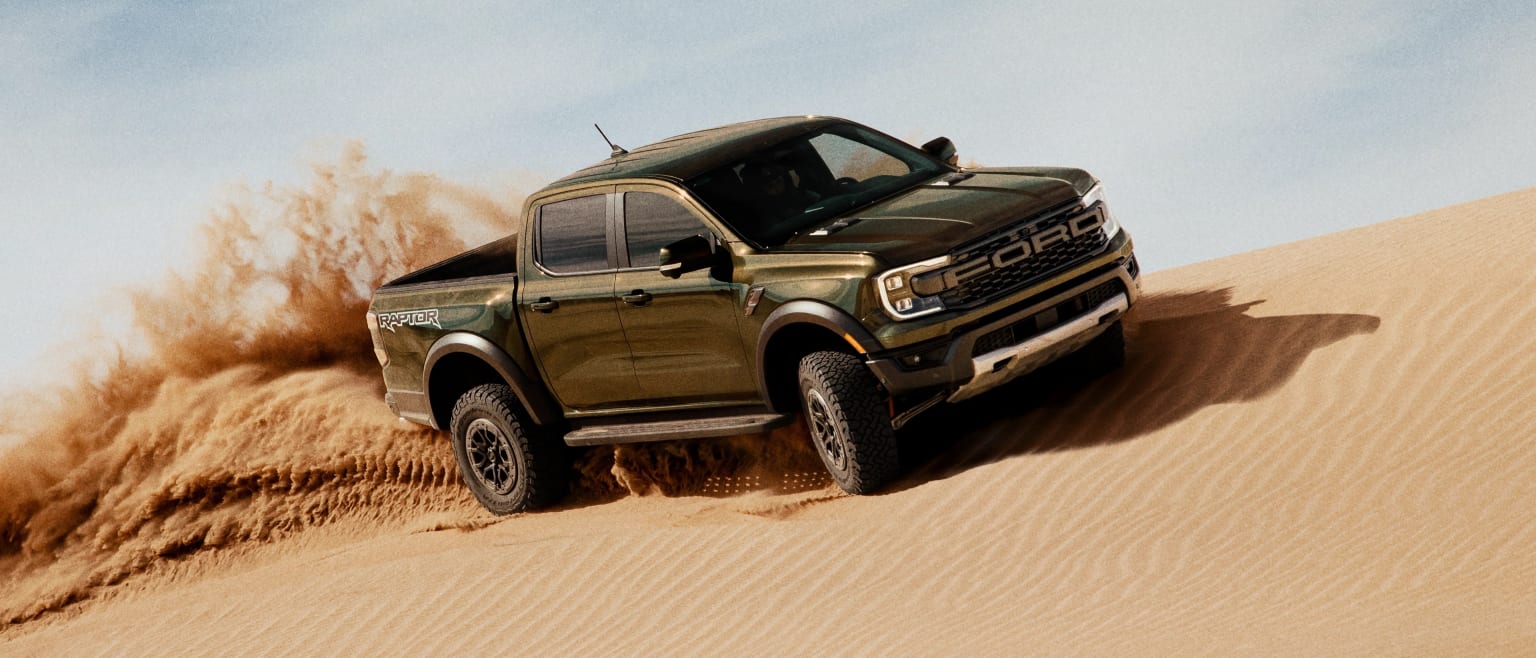
Need Off-Road Ability Without Going Full Raptor?
Ranger’s off-road story doesn’t begin and end with Raptor. The Ranger vs Frontier decision also includes the available FX4 Off-Road Package, which gives applicable Ranger trims extra off-road capability while keeping the towing and payload focus of the standard truck rather than moving all the way to Raptor’s performance-oriented setup.
Frontier takes a similar layered approach. PRO-X brings Bilstein off-road performance shocks with rear-wheel drive, while PRO-4X adds 4x4 and an electronic locking rear differential.
That gives both sides of Ford Ranger vs Nissan Frontier more than one way to build a truck for dirt roads, campsites, job sites, and weekend trails.

Technology Has Moved Well Beyond “Truck Basic”
The current Ranger interior can be much more tech-heavy than the midsize trucks of a few years ago. Ranger XL starts with a 10-inch center display and SYNC® 4A, while an available 12-inch center display appears higher in the lineup. Lariat also adds a 12-inch digital cluster, available 360-Degree Camera capability, B&O® audio, and additional driver-assistance technology.
Frontier offers an available 12.3-inch touchscreen, wireless Apple CarPlay® on applicable trims, available Fender® premium audio, and Nissan Safety Shield® 360 equipment across the lineup.
The Ford Ranger vs Nissan Frontier technology decision is less about one headline screen size and more about which trim includes the cameras, towing tools, connectivity, and driver-assistance features you actually want.
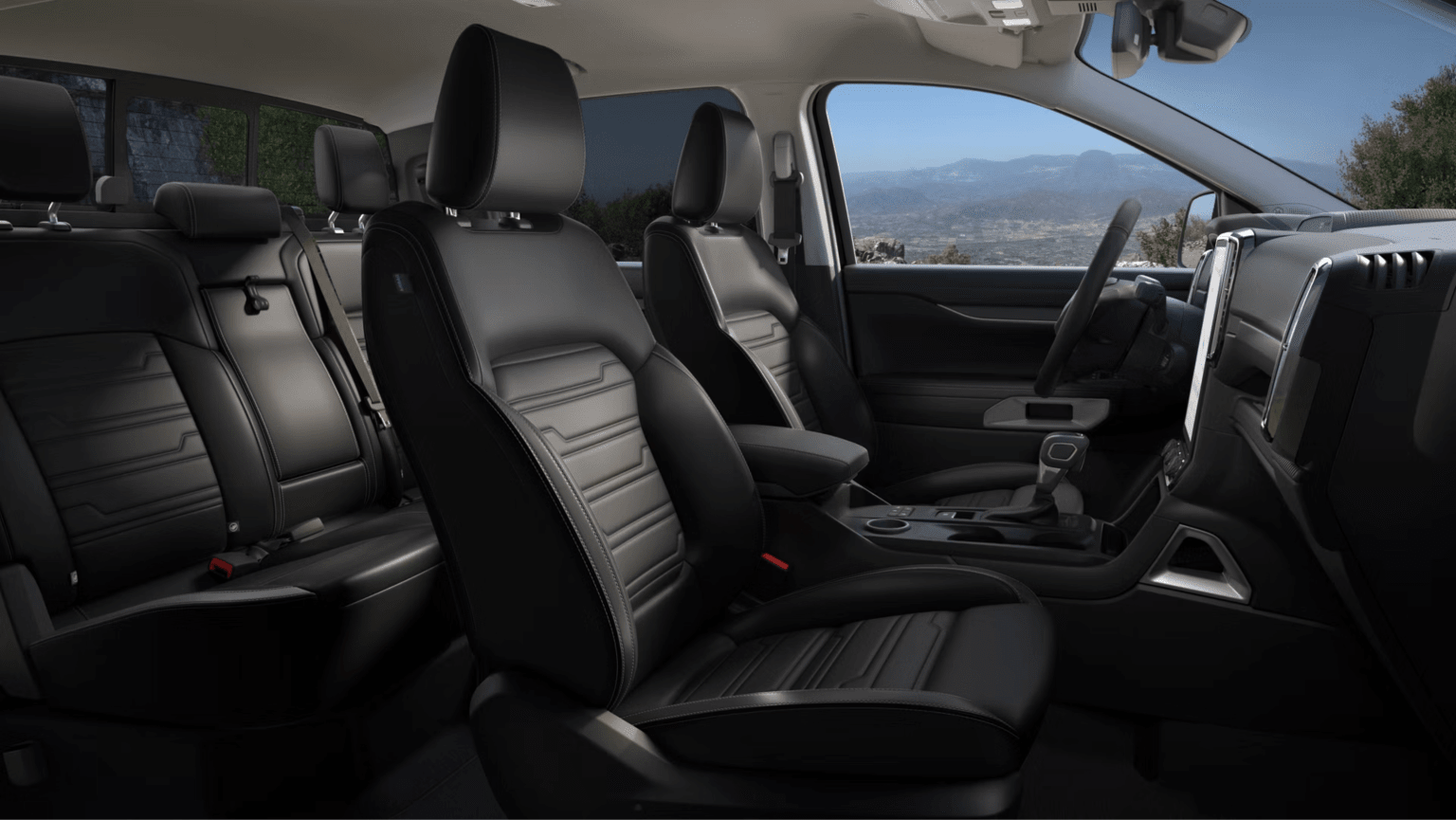
Ranger Keeps the Cab Decision Simple
Ford sells the current Ranger as a five-passenger SuperCrew pickup. That means you don’t have to choose between a smaller cab and a larger one before you start looking at trim, engine, or drivetrain. Rear-seat under-seat storage and fold-flat seating also help make the cabin useful when passengers aren’t along for the ride.
Frontier offers both King Cab and Crew Cab configurations. King Cab seats four, while Crew Cab seats up to five. That added cab variety may appeal to shoppers who want to trade rear passenger room for a different truck configuration.
That’s another clear Ranger vs Frontier difference: Ranger sticks with one four-door SuperCrew setup, while Frontier gives shoppers another cab option.
Which Truck Fits the Work You Actually Do?
The current Nissan Frontier vs Ford Ranger comparison gives each truck a clear reason to be considered.
Frontier brings 310 horsepower standard, an available long-bed Crew Cab, multiple cab configurations, and the straightforward appeal of one V6 across every trim.
Ranger offers more engine choice, a higher maximum available tow rating, greater maximum payload, and a much higher performance ceiling with Ranger Raptor. Its one-cab approach also means every Ranger is already configured around five-passenger SuperCrew practicality.
At J.C. Lewis Ford Pooler, our team can help you move from the Ford Ranger vs Nissan Frontier research stage to the right Ranger configuration for your towing, hauling, commute, and weekend plans.
Ford Ranger vs Nissan Frontier FAQs
Researching Ford Ranger vs Nissan Frontier? These questions cover the differences shoppers are most likely to care about, along with towing, engines, beds, and capability for each truck individually.