
Ford Bronco MPG vs Bronco Sport MPG
Which SUV Saves More at the Pump?
Same Bronco Spirit. Different Fuel Bills. ⛽
Let’s settle the question right away: the Bronco Sport saves more at the pump.
The Bronco Sport is smaller and lighter, pairing compact EcoBoost® engines with standard 4x4. The full-size Bronco brings a larger body, bigger available engines, removable roof and doors, and more serious off-road hardware.
That difference drives the Ford Bronco MPG comparison. The Bronco Sport makes more sense when fuel savings, commuting, and easy maneuverability lead your list. The full-size Bronco is built for shoppers willing to trade some efficiency for open-air driving and stronger trail capability.
For drivers comparing Ford Bronco gas mileage, the numbers matter, but they’re only part of the decision. At J.C. Lewis Ford Pooler, we’ll help you compare both SUVs based on where you drive, how often you fill up, and what you want to do when the pavement ends.
Quick Answer: Bronco Sport Wins at the Pump
For 2026, the Bronco Sport 1.5L is EPA-rated at 25 mpg city, 30 mpg highway, and 27 mpg combined. The 1.5L Sasquatch® returns 23/26/24 mpg, while the 2.0L model is rated at 21/27/23 mpg.
That gives Bronco Sport MPG a clear advantage over full-size Ford Bronco MPG, which ranges from 15 to 20 mpg combined across current EPA-listed configurations.
For shoppers focused on Ford Bronco gas mileage, the Bronco Sport is the clear everyday-efficiency pick. Choose the full-size Bronco when removable doors, an available removable roof, larger engine choices, and more substantial trail equipment matter more than maximum fuel savings.

2026 Ford Bronco MPG: The Official Numbers
Current 2026 Ford Bronco MPG ratings range from 15 to 20 mpg combined, depending on the engine, transmission, trim, tires, and off-road equipment.
A full-size Bronco with the 2.3L EcoBoost engine and 10-speed automatic is rated at 18 mpg city, 22 mpg highway, and 20 mpg combined. The 2.3L manual returns 18 city, 21 highway, and 19 combined. The 2.7L Outer Banks® reaches 19 city, 21 highway, and 20 combined, while the Bronco Raptor® is rated at 15 city, 16 highway, and 15 combined.
That’s why Ford Bronco MPG should always be matched to the exact configuration. A rating from another engine, transmission, trim, or tire package may not reflect the Bronco in front of you.
Ford Bronco MPG at a Glance
The table below compares current EPA ratings for key Bronco and Bronco Sport configurations.
2026 configuration | City MPG | Highway MPG | Combined MPG |
|---|---|---|---|
Bronco Sport 1.5L EcoBoost | 25 | 30 | 27 |
Bronco Sport 1.5L Sasquatch | 23 | 26 | 24 |
Bronco Sport 2.0L EcoBoost | 21 | 27 | 23 |
Full-size Bronco 2.3L automatic | 18 | 22 | 20 |
Full-size Bronco 2.3L manual | 18 | 21 | 19 |
Full-size Bronco Outer Banks 2.7L automatic | 19 | 21 | 20 |
Full-size Bronco Raptor 3.0L | 15 | 16 | 15 |
The Bronco Sport delivers between 23 and 27 mpg combined in the EPA-listed configurations, while the full-size Bronco configurations shown range from 15 to 20 mpg combined. The gap in Ford Bronco MPG makes the smaller SUV the consistent fuel-economy winner.
Why Bronco Sport Uses Less Fuel
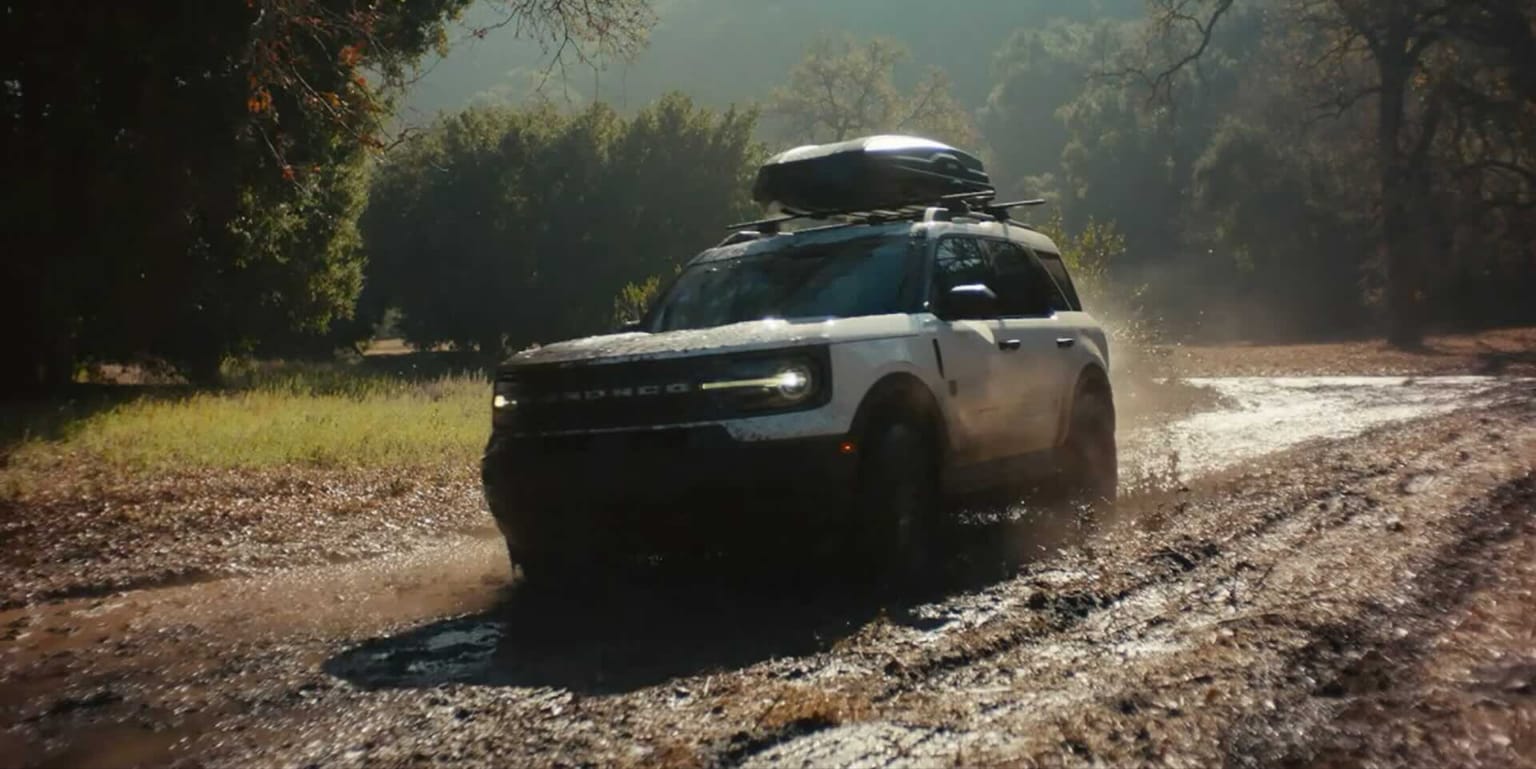
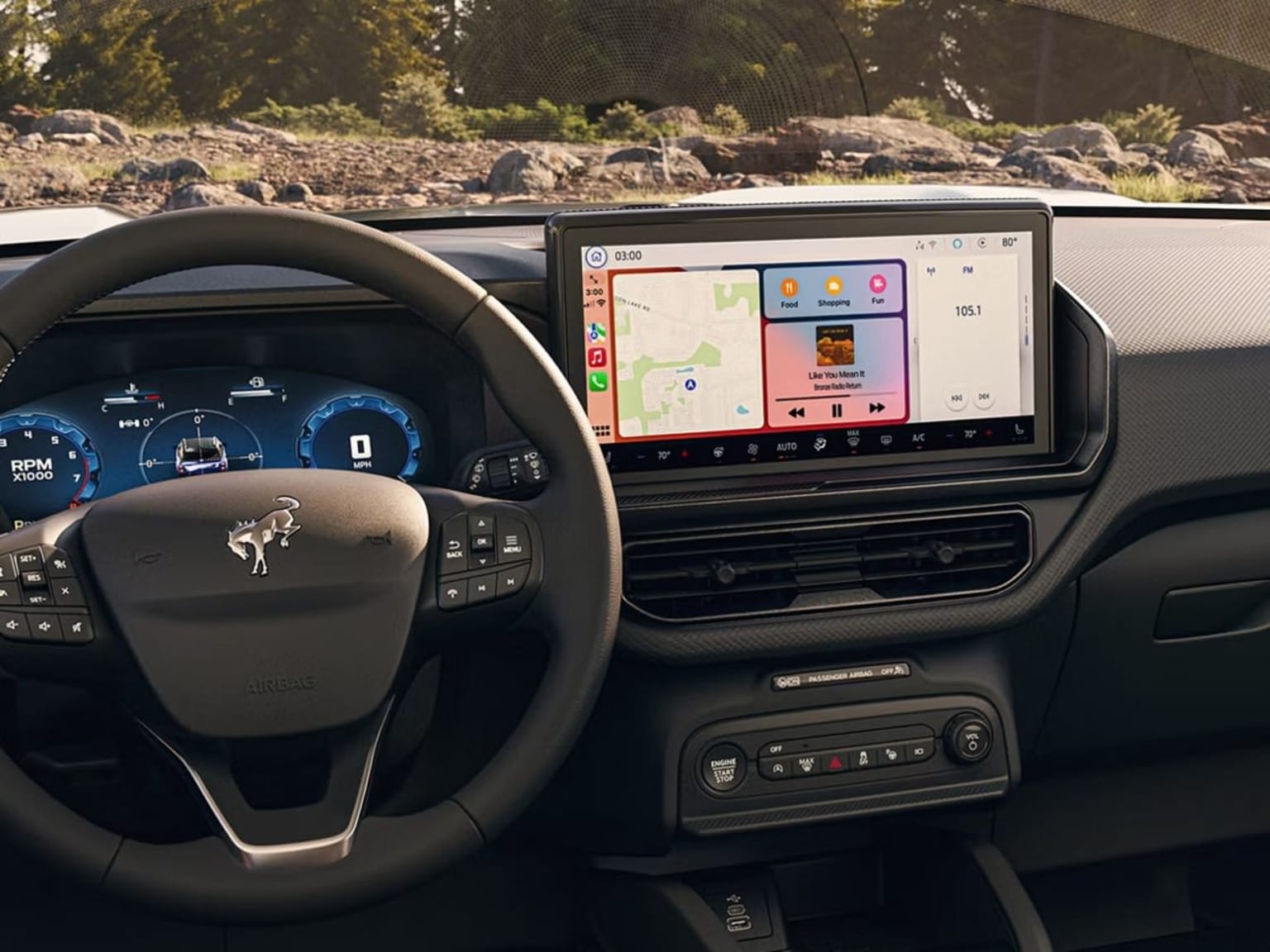
The difference in Ford Bronco MPG isn’t accidental. These SUVs share Bronco styling and standard 4x4, but they’re designed around different priorities.
Full-Size Bronco: More Hardware, More Capability
The full-size Bronco is a body-on-frame SUV offered in two-door and four-door configurations. Engine choices include a 2.3L EcoBoost® I-4, 2.7L EcoBoost V6, and 3.0L EcoBoost V6 in the Bronco Raptor®, with up to 300, 330, and 418 horsepower.
Removable doors and roof options
Larger available engines
Available 35-inch tires
More ground clearance and trail hardware
Two-door and four-door configurations
Those features give the full-size Bronco its distinctive off-road character, but they can also affect Ford Bronco gas mileage.
Bronco Sport: Built for Monday Through Sunday
The Bronco Sport uses a compact platform and offers a 1.5L or 2.0L EcoBoost engine. Every trim comes with 4x4, while the lighter platform and smaller engines help it return stronger mileage.
Up to 27 mpg combined
Standard 4x4
Compact dimensions for easier parking
Five standard G.O.A.T. Modes®
Available advanced 4x4 and trail equipment
Choose the 1.5L when Bronco Sport MPG matters most. The 2.0L Badlands® adds more power and advanced 4x4 hardware, but its combined rating drops to 23 mpg. Ford rates the engines at 180 and 250 horsepower, respectively.
What Can Change Bronco and Bronco Sport MPG?
Real-world Ford Bronco MPG depends on more than the engine. Tires, off-road packages, added equipment, cargo, weather, traffic, and driving habits can affect how much fuel either SUV uses.
Tires
Larger all-terrain tires weigh more and can create additional rolling resistance compared with smaller road-focused tires. That can lower Ford Bronco MPG or Bronco Sport efficiency.
Larger tire diameter
More aggressive tread
Added rotational weight
Improper tire pressure
Off-Road Packages
Trail packages can lower efficiency by adding larger tires and heavier off-road hardware.
The Bronco Sport shows the tradeoff clearly:
Standard 1.5L: 27 mpg combined
1.5L Sasquatch®: 24 mpg combined
All-terrain tires
HOSS 2.0 suspension
Underbody protection
Advanced 4x4 with a twin-clutch rear drive unit
Driving Habits
High speeds, hard acceleration, idling, short trips, roof gear, and extra cargo can all increase fuel use.
Better Ford Bronco gas mileage starts with:
Smooth acceleration
Steady speeds
Proper tire pressure
Regular maintenance
Fuel Tank Capacity: Better Mileage or More Gallons?
The Bronco Sport holds less fuel but travels farther on each gallon. Full-size Bronco models carry more fuel, but tank capacity doesn’t change Ford Bronco MPG. It only determines how much gasoline the SUV can hold. That distinction matters when comparing tank size with real-world Ford Bronco gas mileage.
Bronco Sport
The 2026 Bronco Sport has a 16-gallon tank with either EcoBoost engine.
16-gallon capacity
Same tank size with either engine
Up to 27 mpg combined
Lower fuel use over the same distance
The 1.5L model offers the strongest combination of tank size and efficiency.
Full-Size Bronco
The 2026 full-size Bronco has a 16.9-gallon tank in two-door models and a 20.8-gallon tank in four-door models.
16.9 gallons in two-door models
20.8 gallons in four-door models
Two-door capacity is close to the Bronco Sport
Four-door models carry 4.8 gallons more than the Bronco Sport
The larger four-door tank can help offset lower efficiency by allowing the SUV to carry more fuel between stops.

What Gas Does Each Bronco Take?
Fuel recommendations vary by engine, so check the owner’s manual or fuel door for the exact SUV.
Bronco Sport
1.5L EcoBoost®: Regular unleaded minimum
2.0L EcoBoost: Regular unleaded minimum
Premium recommended for the 2.0L
Full-Size Bronco
2.3L EcoBoost: 87 octane minimum, 91+ recommended
2.7L EcoBoost V6: 87 octane minimum, 91+ recommended
Bronco Raptor® 3.0L EcoBoost V6: 91+ octane specified
Which Bronco Belongs in Your Driveway?
Choose the Bronco Sport for better efficiency, easier parking, flexible cargo space, and everyday 4x4 capability. For shoppers focused on Ford Bronco gas mileage, the 1.5L model is the clear leader.
Choose the full-size Bronco when removable doors, open-air driving, larger engines, and tougher trail hardware matter more than fuel savings. In that case, Ford Bronco MPG is part of a bigger capability tradeoff.
Put Both Broncos to the Test in Pooler
Fuel ratings show how much gasoline each SUV may use. A test drive shows which one fits your life.
At J.C. Lewis Ford Pooler, we’ll help you compare Ford Bronco MPG, engines, trims, cabin space, cargo room, off-road equipment, and everyday comfort side by side.
Browse our Bronco and Bronco Sport inventory online or visit us to decide whether fuel savings or full-size capability belongs at the top of your list.
Browse Our Ford Bronco and Bronco Sport Inventory
Ford Bronco Fuel Economy FAQs
Have questions about Ford Bronco MPG, tank sizes, engine choices, or fuel requirements? Here are quick answers for shoppers comparing the Bronco and Bronco Sport.
Estimate your monthly payment
Fill out the values below to calculate the estimated monthly cost of financing
$
$
$
$727/mo
Estimated monthly payment
Total Price
$50,000
Trade In
-$3,000
Down Payment
-$3,000
Amount Financed
$44,000
Estimated Monthly Payment
$727
Ready to compare in person?
Visit J.C. Lewis Ford Pooler to test drive both models and get a precise MPG and cost comparison for the trims you’re considering.
J.C. Lewis Ford Pooler
501 Memorial Blvd, Pooler, GA
Showroom Hours
Friday
9am - 7pm
Saturday
9am - 6pm
Sunday
Closed
Monday
9am - 7pm
Tuesday
9am - 7pm
Wednesday
9am - 7pm
Thursday
9am - 7pm